This is another brief excerpt from Human Planet, currently being shown on the Discovery Chanel and the BBC. I this video you see a group of Dorobo hunters in southern Kenya stealing their dinner from a pride of lions.
Monday, May 9, 2011

Friday, May 6, 2011
A Brief Look at the Cegga Custom Hatchet
I have to give a big thanks to Ches from North Carolina for letting me use his very rare hatchet for this review. I am always amazed when people trust me with such valuable tools and am truly grateful for the opportunity.
Of course, this in not a hatchet that you can just go out and buy. It is a custom creation by Cegga. For those of you who do not know him, he is an employee for Hultafors/Hults Bruk in Sweden. Most of his axes are modified versions of the Hultafors Classical line of axes, and are hard to find. This one was initially made for a member of Bushcraft UK, and then after several trades/sales, made its way to Ches, who, being the cool guy that he is, contacted me and offered me the opportunity to test it.

Specifications:
Manufacturer: Cegga/Hultafors
Axe Head Weights: Overall weight is 1 1/2 lb. Head weight is about 3/4 lb.
Axe Length: 15 1/4 inches
Axe Head Material: Unknown Swedish steel
Handle Material: Hickory
Cost: As negotiated
The first thing that I noticed about the axe is that it has been very well finished. I don’t know exactly what the initial axe looked like, but clearly a lot of work has been put into it. As you can see from the picture, the head has been highly polished. All lines have been made smooth and continuous, and all imperfections have been removed.
Even more impressive is the finishing job on the handle. It almost doesn’t feel like wood. On most other axes, including the high end ones, you can feel the texture of the wood-the grain, the roughness, the pores in the wood, etc. The handle on the Cegga axe appears to have been somehow oiled and waxed so thoroughly that the whole surface has a uniform texture. For some reason, I was very impressed by that fact. The head is attached to the handle using a wooden wedge with a circular metal pin, typical of Hultafors.
The grinding of the head has of course removed a good amount of material from it. My guess is that Cegga started with a Hultafors Trekking Axe (HB FY-0,5 MINI), which has a head weight of 1.1 lb. After the material was removed, the weight of the head probably dropped down to 3/4 lb. I say that because of the comparison to the Gransfors Bruks Wildlife Hatchet.

The Wildlife Hatchet has an overall weight of 1 1/2 lb. Of that weight, the handle weight half a pound, making the head 1 lb. The two axes seem to have about the same overall weight. The Cegga axe however has a much more robust handle. It is certainly longer by more than an inch, and on top of that, it is thicker. Since the Wildlife Hatchet head weight about a pound, the head of the Cegga axe must be less than that, probably closer to 3/4 lb.
How does that translate into performance? Well, I took the two hatchets out into the woods for some testing. My experience has been that increasing the handle length does not compensate very well for a decrease in weight. For example, my Husqvarna hatchet has a handle that is about an inch shorter than the Wildlife Hatchet, but because the head is a quarter of a pound heavier, it still easily outperforms the Wildlife Hatchet.
The results I got confirmed that. When it comes to axes, weight is important. That being said however, I actually think that the difference in performance was much more a result of the bit profile of the two axes. It is impossible to detect in pictures but the Cegga axe has a slightly thicker bit. The overall thickness of the head is about the same, but the very edge was thicker. Since I mostly work with hard wood, this significantly detracts from the performance. If I was working with soft wood, this probably wouldn’t be a problem at all, but in hickory, the Cegga axe has a hard time penetrating into the wood.
Overall, this is a beautiful tool. Every aspect of it has been touched up. The head is uniformly polished and the lines are smooth and continuous; and the handle is perfectly finished. The decreased head weight, however, also decreases performance, and so does the thicker grind of the bit. For the same overall weight, the Wildlife Hatchet manages to outperform the Cegga axe, at least in hard wood. Also keep in mind (and this is true with all axes where the head is not protected by paint or patina), you have to clean and oil the head. The clean shiny finish is a magnet for rust, and this is something you will have to keep an eye on. I think the conclusion of all this is that Cegga does good work, and that if you are lucky enough to be able get him to make you a custom axe, go for it, but make sure you give him the specifications that work for you.
Of course, this in not a hatchet that you can just go out and buy. It is a custom creation by Cegga. For those of you who do not know him, he is an employee for Hultafors/Hults Bruk in Sweden. Most of his axes are modified versions of the Hultafors Classical line of axes, and are hard to find. This one was initially made for a member of Bushcraft UK, and then after several trades/sales, made its way to Ches, who, being the cool guy that he is, contacted me and offered me the opportunity to test it.

Specifications:
Manufacturer: Cegga/Hultafors
Axe Head Weights: Overall weight is 1 1/2 lb. Head weight is about 3/4 lb.
Axe Length: 15 1/4 inches
Axe Head Material: Unknown Swedish steel
Handle Material: Hickory
Cost: As negotiated
The first thing that I noticed about the axe is that it has been very well finished. I don’t know exactly what the initial axe looked like, but clearly a lot of work has been put into it. As you can see from the picture, the head has been highly polished. All lines have been made smooth and continuous, and all imperfections have been removed.
Even more impressive is the finishing job on the handle. It almost doesn’t feel like wood. On most other axes, including the high end ones, you can feel the texture of the wood-the grain, the roughness, the pores in the wood, etc. The handle on the Cegga axe appears to have been somehow oiled and waxed so thoroughly that the whole surface has a uniform texture. For some reason, I was very impressed by that fact. The head is attached to the handle using a wooden wedge with a circular metal pin, typical of Hultafors.
The grinding of the head has of course removed a good amount of material from it. My guess is that Cegga started with a Hultafors Trekking Axe (HB FY-0,5 MINI), which has a head weight of 1.1 lb. After the material was removed, the weight of the head probably dropped down to 3/4 lb. I say that because of the comparison to the Gransfors Bruks Wildlife Hatchet.

The Wildlife Hatchet has an overall weight of 1 1/2 lb. Of that weight, the handle weight half a pound, making the head 1 lb. The two axes seem to have about the same overall weight. The Cegga axe however has a much more robust handle. It is certainly longer by more than an inch, and on top of that, it is thicker. Since the Wildlife Hatchet head weight about a pound, the head of the Cegga axe must be less than that, probably closer to 3/4 lb.
How does that translate into performance? Well, I took the two hatchets out into the woods for some testing. My experience has been that increasing the handle length does not compensate very well for a decrease in weight. For example, my Husqvarna hatchet has a handle that is about an inch shorter than the Wildlife Hatchet, but because the head is a quarter of a pound heavier, it still easily outperforms the Wildlife Hatchet.
The results I got confirmed that. When it comes to axes, weight is important. That being said however, I actually think that the difference in performance was much more a result of the bit profile of the two axes. It is impossible to detect in pictures but the Cegga axe has a slightly thicker bit. The overall thickness of the head is about the same, but the very edge was thicker. Since I mostly work with hard wood, this significantly detracts from the performance. If I was working with soft wood, this probably wouldn’t be a problem at all, but in hickory, the Cegga axe has a hard time penetrating into the wood.
Overall, this is a beautiful tool. Every aspect of it has been touched up. The head is uniformly polished and the lines are smooth and continuous; and the handle is perfectly finished. The decreased head weight, however, also decreases performance, and so does the thicker grind of the bit. For the same overall weight, the Wildlife Hatchet manages to outperform the Cegga axe, at least in hard wood. Also keep in mind (and this is true with all axes where the head is not protected by paint or patina), you have to clean and oil the head. The clean shiny finish is a magnet for rust, and this is something you will have to keep an eye on. I think the conclusion of all this is that Cegga does good work, and that if you are lucky enough to be able get him to make you a custom axe, go for it, but make sure you give him the specifications that work for you.
Wednesday, May 4, 2011
Lighting a Fire with Flint and Steel
Previously I briefly mentioned how to start a fire with a ferrocerium rod. You can see the post here. These days many people incorrectly refer to that method as “flint and steel”. The reality is that the ferrocerium rod is a modern fire-making implement. The true flint and steel method has been around for millennia and works in a slightly different way.
When using a ferrocerium rod to make sparks, the striker actually shaves off pieces from the rod, which then heat up into sparks. With the flint and steel method, the flint actually shaves off pieces from the metal, which then oxidize and create sparks. These sparks are much duller, and require a very fine tinder to catch.
The overall fire starting method with fling and steel will be very similar to that with a ferrocerium rod-you will simply need an extra step with a very fine tinder to catch the initial spark.
The tools required for the task are very basic. They consist of a piece of sharp flint, a carbon steel striker (or the spine of a carbon steel knife), and the extra fine tinder.

Your basic tinder bundle for the fire will look very much like that for the ferrocerium rod fire. You will need some finely shredded grass or a fine fiber like cotton, scraped birch bark, or cattail pollen, gradually moving to courser materials. Before the spark or ember can reach that tinder bundle however, you will require an extra tinder. The faint sparks from the flint and steel will not ignite simple cotton or birch bark shavings. What you need is a specially prepared, extra fine tinder to catch the initial spark. There are several different materials from which it can be made, but the easiest method is to just char some plant material. A piece of charcoal will work fine, so will charred cattail pollen.
IMPORTANT-the material has to be charred, not burnt. To char the material, it has to be heated without igniting. This happen naturally with charcoal from the inner core of the wood, but with finer materials, you will need a metal container (or another method of excluding the flame) in which to place the material before tossing it on the fire. The Altoids tin you see above does the job well. You do not need to make any holes in it; just place the material inside, close it, and place it on the fire. It is done when all the material has turned black. The easiest material to use for this is cotton cloth. This creates a tinder that is easier to manipulate when done. A thick piece of denim works the best, but so will any cotton fabric. This is often referred to as charcloth.
Once you have the charcloth, take a small amount and place it on top of your piece of flint. Hold them in one hand, and using the metal striker, strike the edge of the flint in a downward motion.

Sparks will fly, and hopefully one will end up on top of the charcloth. This should take one or two strikes.

At this point, there is no rush. The charcloth will glow for a while. Take your tinder bundle and place it inside. Now begin blowing until you have a flame.

It is a very simple method, as long as you have prepared tinder. That is why in that Altoids tin a carry the flint, steel striker and some charcloth.
There are some other items you may consider. In the picture below you see a nice brass container of similar size to an Altoid tin and a tinder tube.

The container is just a nice container. The tinder tube however has a purpose. It serves to replace the charcloth. The tinder tube is nothing more than a cotton rope in a small brass tube. You have to initially ignite the end of the rope and then put it out. This will char it. You can then use that end in the same way as the charloth. Place it on top of the flint, and wait for a spark to land on it. Put the end in your tinder bundle and blow it to flame. Once done, pull the rope inside the tube, and the ember will go out. It works well, but I find it harder to ignite the tinder bundle with this method than simple charcloth because the whole time you are trying to make sure you can withdraw the tube when the flame catches. That is why I don’t use this method, but you may like it.
When using a ferrocerium rod to make sparks, the striker actually shaves off pieces from the rod, which then heat up into sparks. With the flint and steel method, the flint actually shaves off pieces from the metal, which then oxidize and create sparks. These sparks are much duller, and require a very fine tinder to catch.
The overall fire starting method with fling and steel will be very similar to that with a ferrocerium rod-you will simply need an extra step with a very fine tinder to catch the initial spark.
The tools required for the task are very basic. They consist of a piece of sharp flint, a carbon steel striker (or the spine of a carbon steel knife), and the extra fine tinder.

Your basic tinder bundle for the fire will look very much like that for the ferrocerium rod fire. You will need some finely shredded grass or a fine fiber like cotton, scraped birch bark, or cattail pollen, gradually moving to courser materials. Before the spark or ember can reach that tinder bundle however, you will require an extra tinder. The faint sparks from the flint and steel will not ignite simple cotton or birch bark shavings. What you need is a specially prepared, extra fine tinder to catch the initial spark. There are several different materials from which it can be made, but the easiest method is to just char some plant material. A piece of charcoal will work fine, so will charred cattail pollen.
IMPORTANT-the material has to be charred, not burnt. To char the material, it has to be heated without igniting. This happen naturally with charcoal from the inner core of the wood, but with finer materials, you will need a metal container (or another method of excluding the flame) in which to place the material before tossing it on the fire. The Altoids tin you see above does the job well. You do not need to make any holes in it; just place the material inside, close it, and place it on the fire. It is done when all the material has turned black. The easiest material to use for this is cotton cloth. This creates a tinder that is easier to manipulate when done. A thick piece of denim works the best, but so will any cotton fabric. This is often referred to as charcloth.
Once you have the charcloth, take a small amount and place it on top of your piece of flint. Hold them in one hand, and using the metal striker, strike the edge of the flint in a downward motion.

Sparks will fly, and hopefully one will end up on top of the charcloth. This should take one or two strikes.

At this point, there is no rush. The charcloth will glow for a while. Take your tinder bundle and place it inside. Now begin blowing until you have a flame.

It is a very simple method, as long as you have prepared tinder. That is why in that Altoids tin a carry the flint, steel striker and some charcloth.
There are some other items you may consider. In the picture below you see a nice brass container of similar size to an Altoid tin and a tinder tube.

The container is just a nice container. The tinder tube however has a purpose. It serves to replace the charcloth. The tinder tube is nothing more than a cotton rope in a small brass tube. You have to initially ignite the end of the rope and then put it out. This will char it. You can then use that end in the same way as the charloth. Place it on top of the flint, and wait for a spark to land on it. Put the end in your tinder bundle and blow it to flame. Once done, pull the rope inside the tube, and the ember will go out. It works well, but I find it harder to ignite the tinder bundle with this method than simple charcloth because the whole time you are trying to make sure you can withdraw the tube when the flame catches. That is why I don’t use this method, but you may like it.
Monday, May 2, 2011
Gransfors Bruks Hunters Axe Review
In this post I’ll take a look at one of the less widely used Gransfors Bruks axes-the Hunters Axe. According to the manufacturer, the tool was designed specifically to help hunters skin large animals by using the rounded poll to hit and separate the hide from the body.

Specifications:
Manufacturer: Gransfors Bruks AB
Axe Head Weight: 1.5 lb
Axe Length: 19 inches
Axe Head Material: Unknown Swedish steel
Handle Material: Hickory
Cost: $170.00

This is a very expensive axe, even more so because it is what I would consider a specialized tool. In this post I will compare it to the Gransfors Bruks Small Forest Axe, and their length and weight specifications are about the same.


The handle of the Hunters Axe a little shorter than that of the Small Forest Axe. It also has a completely different shape. While the Small Forest Axe has a handle which looks like a shrunken down felling axe handle, the Hunters Axe appears to have an enlarged Wildlife Hatchet handle. The Hunters Axe handle also has grooved handle, which it intended to help with the grip when the axe is covered in blood. I find that the rest of the time this makes the handle less comfortable to use as it abrades the hand. The grain of the handle is good, as expected from an axe with this price tag, but there is some heart wood, which may be an issue for some people.
The head of the Gransfors Bruks Hunters Axe is very similar to that of the Small Forest Axe. The bit is thin and penetrates well into wood. It similarly suffers from the problem of having a head which expands too abruptly between the bit and the eye.
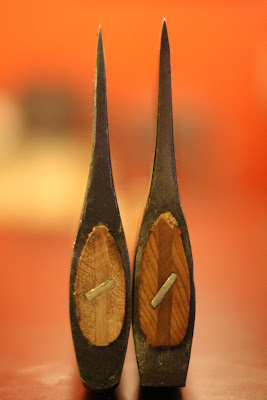
The eye the Hunters Axe is a bit smaller and more rounded than that of the Small Forest Axe. The design appears to be there to accommodate the hatchet-like handle used on the Hunters Axe.

The balance of the axe is fairly good, and comparable to that of the Small Forest Axe. The bit is sightly heavier than the poll, but overall, the balance is good.

The other significant difference between the two axes is the Hunters’ Axe rounded poll. It is well polished and any sharp corners or flat surfaces have been removed. I don’t know how much of an advantage this provides when skinning a large animal, in particular when compared to an axe with a non rounded poll, but it certainly does not help with any other task to which you may put the axe. Forget about using it to hammer in tent stakes. You are as likely to hit it with a bar of soap, as you are with that rounded poll.

I think that reflects my overall impression of the Gransfors Bruks Hunters Axe. It appears to be a specialized tool for which I could not find good use during regular camp use. The rounded poll was a big down side, as you can no longer use the poll to hammer in tent stakes, crush nuts, etc. The handle was made more uncomfortable my the grooves, and the reduced length, combined with the hatchet like design made it uncomfortable to use with two hands. In the end I found myself using it as a large hatchet. I’m sure that all of these characteristics would be very useful to someone who skins a lot of elk, and this may be the perfect axe for that person, but in my opinion all of the design alterations made it a lot less usable as a general bushcraft axe.

Specifications:
Manufacturer: Gransfors Bruks AB
Axe Head Weight: 1.5 lb
Axe Length: 19 inches
Axe Head Material: Unknown Swedish steel
Handle Material: Hickory
Cost: $170.00

This is a very expensive axe, even more so because it is what I would consider a specialized tool. In this post I will compare it to the Gransfors Bruks Small Forest Axe, and their length and weight specifications are about the same.


The handle of the Hunters Axe a little shorter than that of the Small Forest Axe. It also has a completely different shape. While the Small Forest Axe has a handle which looks like a shrunken down felling axe handle, the Hunters Axe appears to have an enlarged Wildlife Hatchet handle. The Hunters Axe handle also has grooved handle, which it intended to help with the grip when the axe is covered in blood. I find that the rest of the time this makes the handle less comfortable to use as it abrades the hand. The grain of the handle is good, as expected from an axe with this price tag, but there is some heart wood, which may be an issue for some people.
The head of the Gransfors Bruks Hunters Axe is very similar to that of the Small Forest Axe. The bit is thin and penetrates well into wood. It similarly suffers from the problem of having a head which expands too abruptly between the bit and the eye.

The eye the Hunters Axe is a bit smaller and more rounded than that of the Small Forest Axe. The design appears to be there to accommodate the hatchet-like handle used on the Hunters Axe.

The balance of the axe is fairly good, and comparable to that of the Small Forest Axe. The bit is sightly heavier than the poll, but overall, the balance is good.

The other significant difference between the two axes is the Hunters’ Axe rounded poll. It is well polished and any sharp corners or flat surfaces have been removed. I don’t know how much of an advantage this provides when skinning a large animal, in particular when compared to an axe with a non rounded poll, but it certainly does not help with any other task to which you may put the axe. Forget about using it to hammer in tent stakes. You are as likely to hit it with a bar of soap, as you are with that rounded poll.

I think that reflects my overall impression of the Gransfors Bruks Hunters Axe. It appears to be a specialized tool for which I could not find good use during regular camp use. The rounded poll was a big down side, as you can no longer use the poll to hammer in tent stakes, crush nuts, etc. The handle was made more uncomfortable my the grooves, and the reduced length, combined with the hatchet like design made it uncomfortable to use with two hands. In the end I found myself using it as a large hatchet. I’m sure that all of these characteristics would be very useful to someone who skins a lot of elk, and this may be the perfect axe for that person, but in my opinion all of the design alterations made it a lot less usable as a general bushcraft axe.
Subscribe to:
Posts (Atom)